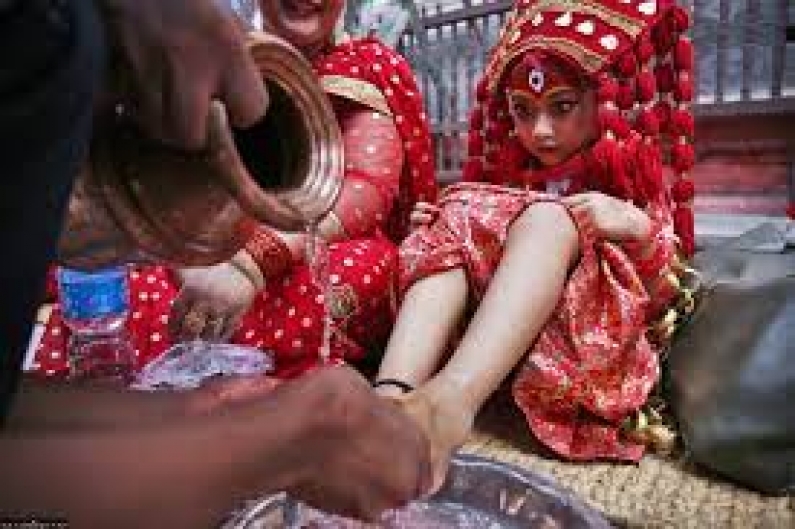
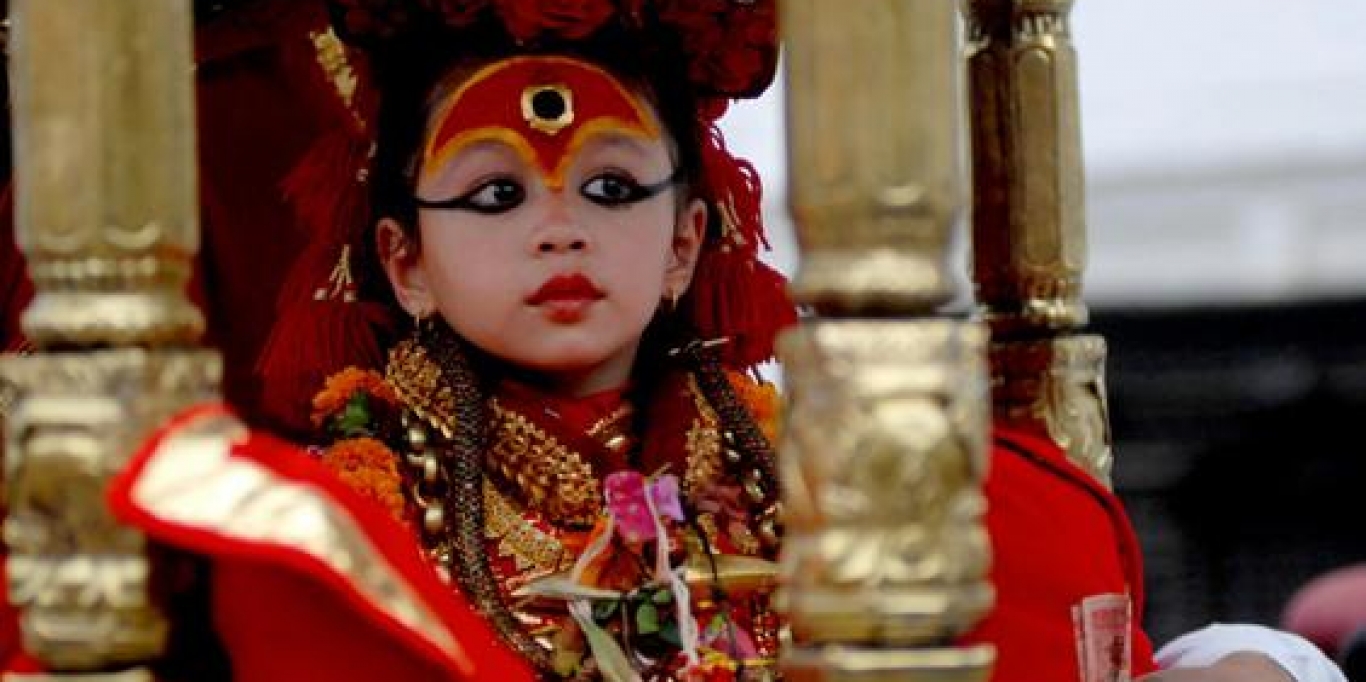
The Kumari, known as the Living Goddess of Nepal, is a young girl chosen to embody the Hindu goddess Taleju Bhawani. This centuries-old tradition is deeply rooted in Nepalese spirituality and culture, symbolizing the connection between the divine and the mortal world. The Kumari is revered not only by Hindus but also by Buddhists, making her an essential figure in Nepal’s religious landscape.
The selection process is rigorous, as the girl must meet specific physical and spiritual criteria. Once chosen, she resides in Kumari Ghar, a palace in Kathmandu Durbar Square, where devotees come to seek blessings. Her presence is believed to bring prosperity, protection, and divine favor to those who worship her.
According to Nepalese mythology, the Kumari tradition dates back to the reign of King Jayaprakash Malla in the 17th century. Legend has it that the goddess Taleju Bhawani used to visit the king at night, appearing in human form to play dice and offer guidance. However, one night, the king made an error that offended the goddess, causing her to disappear. Before leaving, she decreed that she would only return in the form of a young girl from the Newar community, thus beginning the tradition of selecting a Living Goddess.
This legend underscores the deep spiritual connection between Nepal’s monarchy and the divine, highlighting the belief that earthly rulers must seek celestial blessings to maintain harmony and prosperity. The Kumari is seen as a guardian of Nepalese traditions, faith, and identity, linking the past with the present.
The Kumari is not just a symbolic figure; she plays an active role in Nepalese society, particularly during Indra Jatra, one of Kathmandu’s most important festivals. During this annual event, the Kumari is carried through the city in a beautifully decorated chariot, blessing thousands of devotees, including Nepal’s ruling leaders.
Though she rarely speaks or interacts directly with visitors, her mere presence is believed to bring divine protection and good fortune. Nepalese people deeply respect this living tradition, and the Kumari continues to be an integral part of Nepal’s cultural and religious identity.
If you’re visiting Nepal, you can witness this fascinating tradition at Kumari Ghar in Kathmandu Durbar Square. The Kumari makes rare but significant public appearances, and if you’re fortunate, you may receive her silent blessing from a palace window.
For those interested in Nepalese history, spirituality, and unique cultural experiences, seeing the Kumari is a must. This living tradition continues to captivate travelers, historians, and spiritual seekers alike.