Impact of Climate Change on Glacial Lakes in the Himalayas: Rising Risks and Urgent Adaptation Measures
This article draws on reporting by Sonia Awale originally published in Nepali Times, presented here in condensed and edited form with permission.
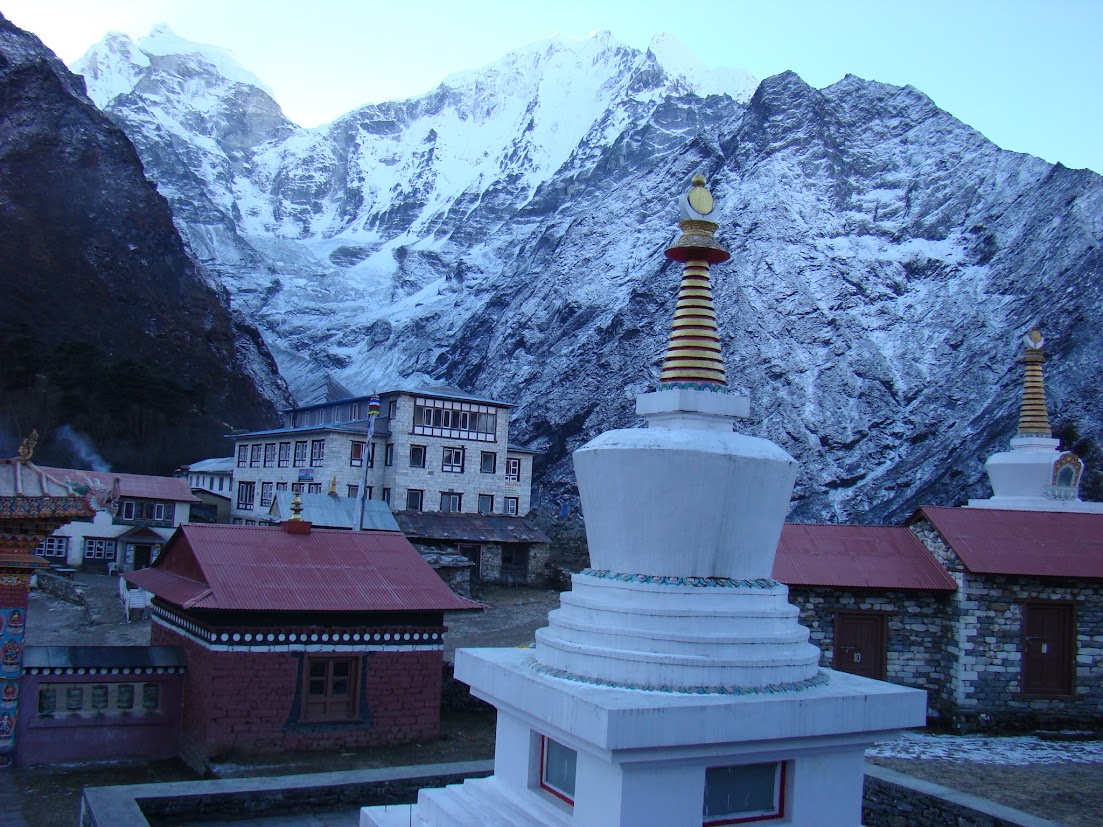
On August 16, 2024, at 9:00 a.m., a 4.5-magnitude earthquake shook Xizang on the Tibetan Plateau. Four hours later, a glacial lake in Nepal, 65 kilometers away, burst, releasing a massive flood. While it remains unclear whether the earthquake triggered the outburst, possible causes include an avalanche from Mount Tengi Ragi Tau's southern ridge or heavy monsoon rains causing a moraine collapse. The meltwater flowed into another lake downstream, setting off a destructive debris flow that swept through the valley, reaching as far as the village of Thame. Fortunately, villagers had time to evacuate, and no lives were lost.
Thame experienced a more devastating flood on August 4, 1985, when a larger glacial lake in the nearby Dig Tsho valley burst after an avalanche. That flood claimed 12 lives, destroyed a newly built hydropower plant, and damaged a section of the road leading to Everest. Tenzing Chogyal Sherpa, a glaciologist from the International Centre for Integrated Mountain Development (ICIMOD), recalls how his family's home in Namche Bazaar was spared because it was built on high ground. However, with roads destroyed, food supplies ran low, and his family survived on rotten potatoes.
Sherpa notes that the recent Thame flood serves as a warning about the dangers of living in mountains, dangers heightened by climate change. The region surrounding Thame contains potentially dangerous glacial lakes, including Lumding Tso, Tso Rolpa, and Dig Tsho, all posing significant threats to downstream communities.
Increasing Frequency of Glacial Lake Outburst Floods (GLOFs)
Although the Thame flood was smaller than the 2021 disaster that damaged the Melamchi reservoir or the 2023 Sikkim flood, the frequency of such incidents is increasing. This rise is directly linked to glacial lake outbursts and moraine collapses caused by heavy rainfall—events becoming more common as the climate warms.
Anil Pokhrel from the National Disaster Risk Reduction and Management Authority (NDRRMA) visited Thame on August 17 to inspect the glaciers above the village. He confirmed that two glacial lakes near Tashi Lapcha were responsible for the flooding. Satellite data revealed that just two years ago, only four lakes existed in the area, but hundreds of new glacial lakes have now formed across the Himalayas, many without names.
Expanding Lakes and Emerging Threats
Some of the most dangerous lakes, like Tso Rolpa and Imja Tso, continue to expand rapidly. While larger lakes are recognized hazards, even small lakes can cause significant damage, as demonstrated by the 1977 overflow of Lake Nare, which wreaked havoc on the region. Even moderate flooding can be destructive; the recent debris flow washed away a bridge over the Dudh Kosi River worth 80 million rupees. Fortunately, most riverside villages had been evacuated, preventing casualties. A larger flood would have jeopardized major hydropower projects downstream.
Pokhrel observed unusually warm conditions during his Thame visit, describing the climate as resembling Kathmandu. Satellite images had shown accelerated snowmelt in the region over the previous month, possibly leading to the cascading failure of the two lakes.
Scientific Evidence and Future Projections
Glacial lake outbursts and debris flows are expected to become more frequent and severe in Nepal as climate change intensifies. The inherent seismic risks in the Himalayas further complicate the situation, making life in the region increasingly hazardous. A report by ICIMOD highlights that glacier mass loss has surged by 65% in recent decades, with flood risks expected to rise even further in the coming century.
Sherpa emphasizes the critical need for on-site observations to complement satellite tracking in such a diverse and complex region. Despite the lack of extensive ground-based data, advancements in remote sensing technology have helped fill knowledge gaps and improve understanding of rapidly changing glaciers.
Urgent Adaptation Measures
Local communities and governments must adapt through comprehensive measures:
- Early Warning Systems: Installing and maintaining systems to alert communities of imminent floods, providing crucial time for evacuation.
- Decentralized Infrastructure: Building smaller hydropower plants rather than large centralized facilities to reduce potential damage.
- Strategic Relocation: Moving critical infrastructure and vulnerable settlements to higher ground, away from flood paths.
- Risk Assessment: Conducting detailed studies of glacial lakes to identify and prioritize the most dangerous sites for intervention.
Transboundary Cooperation and International Support
Given that many of Nepal's rivers are transboundary, Sherpa stresses the importance of establishing early warning systems in coordination with China. To address growing risks, Nepal also requires international assistance for adaptation measures and recovery efforts following disasters.
Sherpa co-founded #SaveOurSnow, a global awareness campaign aimed at empowering Himalayan communities to combat climate-related risks. Through the campaign, Sherpa hopes to draw international attention to extreme weather events—including monsoons, drying springs, winter droughts, and heatwaves—helping communities adapt and survive.
Conclusion: A Call for Urgent Action
The August 2024 Thame flood serves as yet another reminder of the accelerating impacts of climate change on the Himalayan region. As glacial lakes multiply and expand, the risks to downstream communities, infrastructure, and trekking routes grow correspondingly. Addressing these threats requires urgent action at multiple levels: local communities preparing through early warning systems, governments implementing adaptation measures, and international partners providing support and fostering transboundary cooperation. The Himalayas are changing rapidly; our responses must match the speed and scale of these transformations.
Global Nepal Treks remains committed to responsible tourism and the safety of our guests and the communities we visit. We support ongoing efforts to monitor and mitigate GLOF risks and encourage travelers to stay informed about environmental conditions when planning Himalayan adventures.
Website: www.globalnepaltreks.com
Email: info@globalnepaltreks.com