Nepal has a reputation for extremes — 8,000-metre peaks, death-zone altitudes, weeks-long expeditions. That reputation scares off a lot of people who would actually love trekking here, and who could do it safely with the right route and a bit of preparation. The truth is that some of the country's most rewarding trails are entirely manageable for a first-timer with average fitness. This guide walks through the routes that genuinely suit beginners, what "difficulty" means in practical terms, and how to pack so you're neither over-loaded nor caught out.
What "Beginner-Friendly" Actually Means Here
Most trekking content online talks about difficulty in vague terms — "moderate," "challenging" — without explaining what that translates to on the ground. For a beginner, the real variables are: maximum altitude reached, average daily walking hours, total elevation gain per day, and how much of the trail is on stepped stone paths versus gentler dirt trails. A trek that sits under 4,000 metres, involves five to six hours of walking a day, and gains no more than 400-500 metres in elevation on any single day is realistically achievable for someone who hikes occasionally and has a baseline level of leg and cardio fitness. Above that, altitude becomes the dominant factor, not fitness.
Route 1: Poon Hill (Ghorepani-Poon Hill Trek)
This is the classic entry point into Himalayan trekking, and it earns that status. The trek tops out at around 3,210 metres at Poon Hill itself, with the whole loop taking four to five days depending on your start and end points. Days involve three to six hours of walking, mostly on stone-paved trails through rhododendron forest, with teahouses at every stage — so you're never carrying camping gear. The sunrise view over the Annapurna and Dhaulagiri ranges from the viewpoint is one of the most photographed sights in Nepal, and it's earned with far less effort than routes further into the mountains. This is the trek to choose if you want a genuine Himalayan experience without multi-week commitment or serious altitude risk.
Route 2: Mardi Himal
Less crowded than Poon Hill but only slightly harder, Mardi Himal has become popular precisely because it avoids the busiest sections of the main Annapurna trails while still delivering close-up mountain views. The high point sits around 4,500 metres at the base camp, so this one does edge into altitude-awareness territory, but the ascent is gradual enough over five to six days that acclimatisation isn't usually a serious problem for a healthy trekker moving at a sensible pace. The forest sections early in the trek are genuinely beautiful, and the final approach to base camp, with Machapuchare's fishtail peak dominating the skyline, is a payoff most first-timers don't expect from a "beginner" route.
Route 3: Langtang Valley
Langtang gets less attention than the Annapurna or Everest regions, which is exactly its appeal for a first trek. The valley trail follows a river gorge before opening into high pasture with views of Langtang Lirung, and the trek can be done comfortably in seven to eight days at a beginner's pace. Elevation gain is steady rather than steep, teahouses are well-established, and because visitor numbers are lower, the trails feel less like a procession and more like an actual walk through mountain villages. It's also one of the more culturally distinct treks, passing through communities with strong Tibetan Buddhist influence.
Timing and Acclimatisation
October to November and March to April are the two windows almost every route above suits best — stable weather, clear mountain views, and manageable temperatures at altitude. Even on routes that stay under 4,000 metres, mild symptoms of altitude adjustment (headache, slight breathlessness) are common and not a sign anything has gone wrong. The rule that matters more than any packing list: walk slowly, drink more water than feels necessary, and never ascend more than 500 metres in sleeping altitude per day once you're above 3,000 metres.
Permits
All the routes above require a TIMS card (Trekkers' Information Management System) and an area-specific permit — ACAP for the Annapurna region routes, and the Langtang National Park permit for Langtang Valley. These aren't optional paperwork exercises; checkpoints along the trail verify them, and it's far simpler to have a local agency arrange both before you arrive than to sort it out at the border of a restricted zone.
Packing for a Beginner Trek
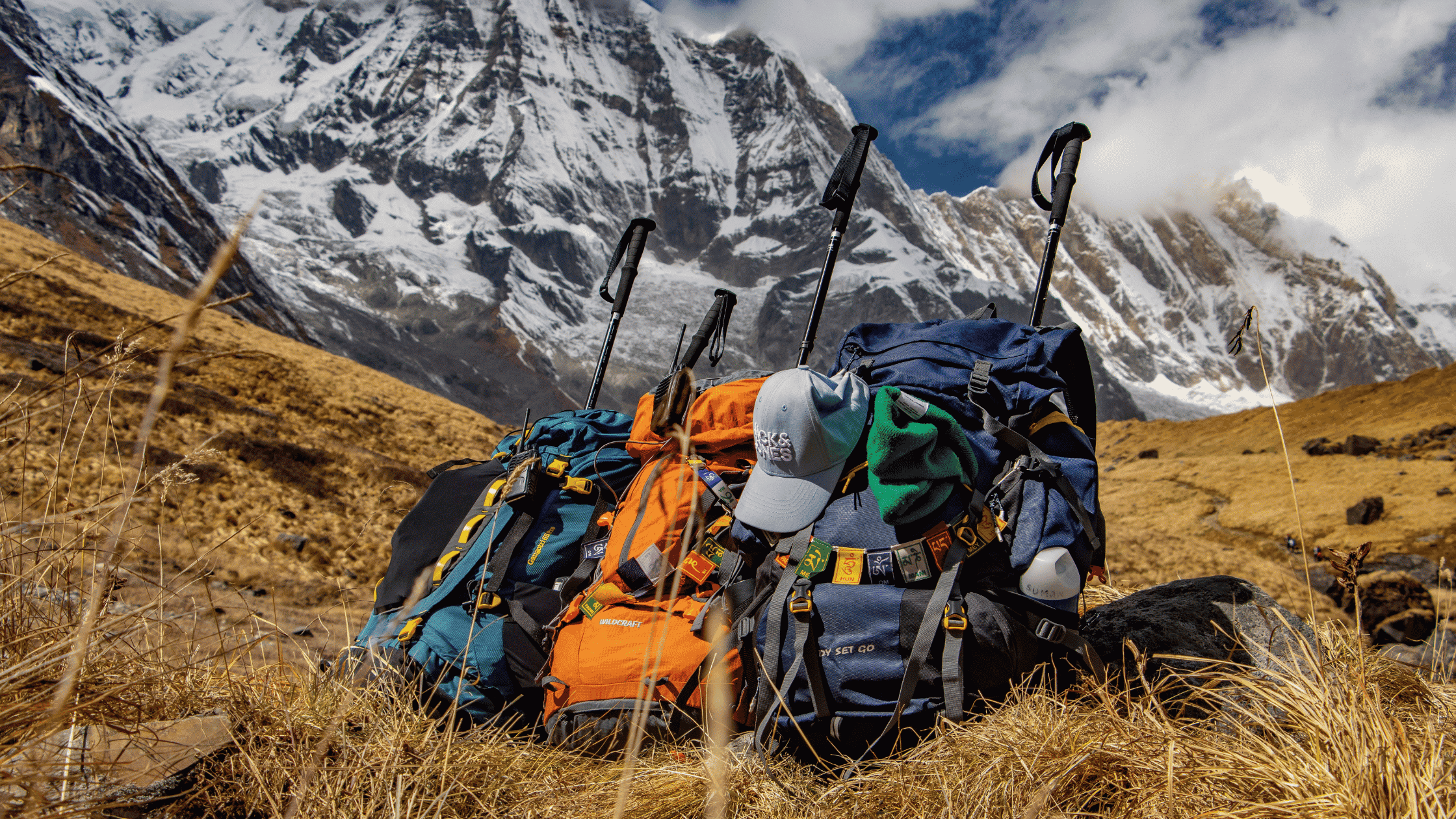
Resist the urge to pack for an expedition. For any of the three routes above, you need: a 3-season sleeping bag rated to at least -5°C (teahouse rooms are unheated), a good pair of already broken-in trekking boots, layered clothing rather than one heavy jacket (a base layer, fleece, and a windproof/waterproof shell), trekking poles if you have knee concerns on descents, a headlamp, water purification tablets or a filter, and a basic first-aid kit including diamox if your doctor has approved it for altitude use. A 30-40 litre daypack is enough if you're using porter or teahouse services and not camping. Overpacking is the single most common beginner mistake — every extra kilo matters more at altitude than it does at sea level.
Getting the Route Right for You
The honest answer to "which beginner trek is best" depends on how much altitude exposure and remoteness you actually want. This is where planning with people who trek these routes constantly, rather than relying on a generic checklist, makes the difference between a trip that matches your fitness and one that doesn't. Global Nepal Treks, a government-licensed operator based in Kathmandu, builds first-time itineraries around exactly this kind of honest fit — matching route, pace and support level to the trekker rather than pushing a fixed package. Their guides are certified and experienced with beginner groups specifically, itineraries are customised rather than templated, and their safety protocols (daily health checks, clear evacuation plans, and realistic acclimatisation days) are built for people doing their first high-altitude trek, not repeat mountaineers. For a first Himalayan trek, that kind of tailored planning is worth more than any gear list.